Hotel-Quality Linens for Every Guest
Professional commercial laundry service delivering crisp, fresh linens with hospitality-grade standards. Fast turnaround, pristine presentation, and hassle-free service for Dallas Airbnb hosts.
Get Linen Service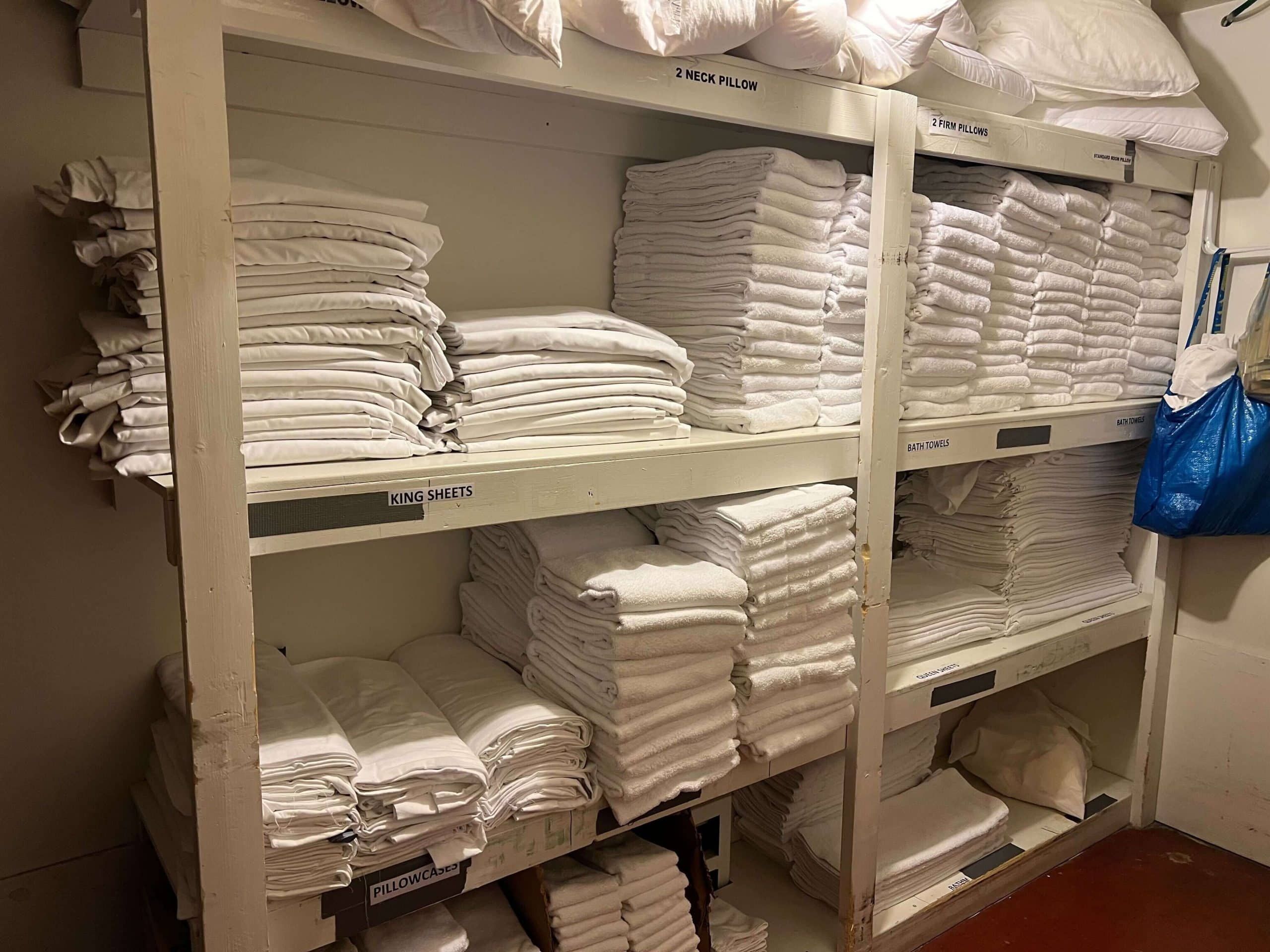
About This Service
Fresh, pristine linens are one of the most noticeable elements of a quality guest experience. Our professional linen and laundry service brings hotel-grade standards to your Dallas Airbnb property. Using commercial-grade equipment, hospitality industry best practices, and premium laundry products, we deliver linens that look, feel, and smell professionally prepared. From bed sheets and duvet covers to towels and kitchen textiles, our service ensures every fabric that touches your guests meets the highest standards of cleanliness and presentation.
Features
- Commercial-grade washing and drying
- Hot water sanitization cycles
- Hypoallergenic detergent options
- Stain treatment and removal
- Fabric-appropriate care protocols
- Whitening and brightening treatments
- Hotel-standard folding techniques
- Towel fluffing and presentation
- Bedding pressing and finishing
- Inventory management and rotation
- Damage and wear assessment
- Same-day turnaround available
- Pickup and delivery service
- Emergency linen replacement
Benefits
- Superior Cleanliness Standards
- Extend Linen Lifespan
- Consistent Guest Experience
- Eliminate Laundry Burden
Why Professional Laundry Service Matters
The quality of your linens directly impacts guest satisfaction and your ability to command premium rates. Studies in the hospitality industry consistently show that guests rate bedding quality and towel freshness among the top factors in their overall satisfaction. Home washing machines, even high-end models, cannot achieve the same sanitation levels, fiber care, or presentation quality as commercial laundry equipment. In Dallas's competitive market, where guests choose between numerous similar properties, professionally laundered linens provide a tangible quality difference that justifies higher nightly rates and generates positive reviews specifically mentioning comfort and cleanliness.
The Linen Service Experience
When you enroll in our linen service, we'll discuss your inventory needs, guest capacity, and turnover frequency to design a service plan. For integrated service (with turnover cleaning), our team collects used linens during checkout cleaning and returns with freshly laundered sets. For standalone service, we schedule convenient pickup times. Your linens are processed in our commercial facility using hospitality protocols, then delivered back to your property folded, fluffed, and ready for staging. We track usage patterns and notify you when items approach replacement time. The result is consistently fresh, hotel-quality linens that enhance every guest stay.
Our Process
Linen Collection & Sorting
During turnover service, we collect all used linens, sort them by fabric type and cleaning requirements, and document inventory to ensure complete replacement. Items requiring special treatment are identified and processed separately.
Commercial-Grade Washing
Linens are washed in commercial machines using hospitality-industry protocols—higher temperatures for sanitization, appropriate detergents for each fabric type, and precise load sizing for optimal cleaning action and rinse quality.
Professional Drying & Finishing
Commercial dryers with moisture sensors prevent over-drying that damages fibers. Items are promptly removed and either folded immediately or pressed as appropriate. Towels are fluffed to hotel standards for maximum absorbency and presentation.
Quality Inspection & Staging
Every item is inspected for stains, damage, or wear before being placed back in service. Linens are then staged in your property using hospitality folding and arrangement techniques that create an inviting, professional presentation for arriving guests.
Frequently Asked Questions
What items are included in your linen laundry service?
Our standard service includes bed linens (sheets, pillowcases, duvet covers), bath towels (bath, hand, washcloths), kitchen textiles (dish towels, pot holders), and basic bathmats. We can also accommodate specialty items like decorative pillows, throw blankets, and table linens. We do not clean guest clothing or personal items. If you have specific items you'd like included, just let us know and we'll accommodate them in our service.
How quickly can you turn around laundry?
Standard turnaround is same-day when combined with turnover cleaning service—your linens will be washed, dried, folded, and back on the beds before the next guest arrives. For standalone laundry service, we offer 24-48 hour turnaround depending on volume. Rush service is available for an additional fee when you need faster processing. We maintain sufficient capacity to handle peak season demands and multiple properties.
Do you use hypoallergenic or fragrance-free products?
Yes, we offer hypoallergenic, fragrance-free detergent options for guests with sensitivities. Our standard products are hospitality-grade and designed to be gentle while effective. We can accommodate specific product requests if you or your guests have particular needs or preferences. Just specify your requirements when setting up service.
What happens if linens are damaged or stained beyond repair?
Our team inspects every item and will notify you of any linens showing excessive wear, damage, or stains that cannot be removed. We maintain a recommended replacement schedule based on hospitality industry standards—typically every 12-18 months for sheets and 6-12 months for towels depending on turnover rate. We can coordinate replacement sourcing through our hospitality suppliers or provide specifications for you to purchase replacements yourself.
Can you handle high-volume laundry during peak season?
Absolutely. Our commercial facility is equipped to handle large volumes, and we scale staffing during Dallas's peak seasons (spring events, summer tourism, fall conventions, and holidays). Many Dallas hosts with multiple properties rely on our service year-round. We recommend advance scheduling during known busy periods, but we can typically accommodate even large volumes with short notice.
Do I need to provide my own linens or do you supply them?
We work with both models. Most Dallas hosts prefer to use their own linens, which we clean and maintain. However, we also offer full linen rental service where we provide hotel-quality sheets, towels, and bedding that we maintain and rotate. The rental option eliminates upfront linen purchases and ensures you always have fresh, high-quality textiles without replacement concerns. We can discuss which model works best for your situation.
How do you ensure linens don't get mixed up between properties?
We use a meticulous tracking system where each host's linens are washed separately and tracked throughout the process. Items are tagged by property and room when needed. For hosts with multiple properties, we can use color-coding or labeling systems to ensure efficient sorting and accurate return. Our facility processes vacation rental linens exclusively, so there's no risk of cross-contamination with commercial or residential laundry.
Related Services
Airbnb Rental Turnover Cleaning
Complete property cleaning between guest stays to ensure 5-star reviews.
Learn MoreAirbnb Housekeeping Deep Clean
Intensive deep cleaning to restore your property to pristine condition.
Learn MoreAirbnb Checkout Cleaning Inspection
Thorough post-checkout inspection combined with complete cleaning service.
Learn MoreBook Your Linen Service Today
Get started with professional cleaning services tailored to your needs.
Get a Free Quoteservices planning guide
How to plan airbnb linen laundry service for a short-term rental in Dallas
Airbnb Cleaning Service of Dallas uses the following planning framework to help property managers and business owners turn a request for vacation-rental turnover cleaning into a scope that can be walked, priced, scheduled, and checked. It is designed for practical comparison and does not replace site-specific safety, material, vendor, or regulatory requirements.
Define the Work Before Pricing It
Before pricing airbnb linen laundry service, document exclusions as carefully as inclusions. Exterior work, high access, consumable supplies, waste handling, specialty floor restoration, equipment interiors, and event cleanup can be scheduled correctly only when responsibility is explicit. A walkthrough for airbnb linen laundry service is most productive when the decision-maker identifies the spaces that create complaints, the areas that carry the most traffic, and the tasks the current program misses. Those observations turn a generic checklist into a practical scope tied to the way the property is actually used. Square footage alone does not define the effort required for airbnb linen laundry service. Occupancy, floor materials, restroom count, food or production activity, security procedures, furniture density, and the time available between closing and reopening all affect labor and equipment planning. Airbnb Linen Laundry Service should begin with a written definition of the rooms, surfaces, fixtures, equipment boundaries, and access conditions included in the work. A useful scope separates routine tasks from periodic restoration so the facility manager can see what happens on every visit and what occurs only on a planned cycle.
Build the Schedule Around Operations
Scheduling should be built around operating hours and risk, not around the cleaning company’s convenience. Some short-term rental environments need a complete after-hours reset, while others benefit from daytime attention to entrances, restrooms, spills, or high-traffic common areas. Access planning is part of service planning. Keys, badges, alarm procedures, loading access, elevator reservations, escort rules, and locked-room approvals should be confirmed before the first airbnb linen laundry service visit so the crew can complete the full scope without improvising. For Dallas–Fort Worth properties, travel windows and building access can materially affect the usable service period. A realistic schedule accounts for security handoffs and operating deadlines rather than promising a start time that leaves too little time to finish. Facilities with irregular occupancy should use a flexible service calendar. Seasonal traffic, events, construction phases, tenant move-ins, inventory cycles, and weather can all create temporary cleaning demand that a rigid schedule will miss.
Make Quality Control Observable
Quality control works best when it is tied to the site-specific scope. A supervisor can inspect completion against named rooms and outcomes, record exceptions, assign corrections, and identify patterns that require a change in staffing, tools, or frequency. Consistent crew assignments improve airbnb linen laundry service because the team learns access routines, material sensitivities, recurring problem areas, and the expectations of the facility contact. Coverage plans are still necessary for absences so consistency does not depend on one individual. Inspection frequency should reflect the complexity of the account. A small weekly office may need periodic supervisory review, while a high-traffic or regulated environment may require documented checks several times each week. Before-and-after documentation is especially valuable for one-time or restorative airbnb linen laundry service. It establishes the starting condition, records the completed result, and helps the facility manager decide whether a recurring maintenance cycle would prevent the same buildup.
Match Methods to Materials and Risk
For sensitive or newly installed materials, a small test area can prevent expensive mistakes. The service plan should identify who approves the test result before broader cleaning or restoration proceeds. A material-safety discussion should include storage and labeling. Facility contacts should know where products and equipment will be kept, which rooms remain accessible to occupants, and how spills or damaged containers are reported. Color-coded cloths, pads, and tools can reduce cross-use between restrooms, food areas, workspaces, and public surfaces. The exact system matters less than having a documented method the crew can follow consistently. Surface identification matters because a process that works on one material can damage another. Before airbnb linen laundry service, confirm flooring, stone, coated metal, glass treatments, upholstery, painted surfaces, and manufacturer restrictions that affect chemistry or agitation.
Use the Walkthrough to Build the Scope
Access and safety constraints should be demonstrated, not merely mentioned. Alarm panels, loading doors, restricted areas, waste points, water access, electrical access, and equipment storage can change the labor plan materially. For larger properties, divide the walkthrough into zones and record the floor type, use, occupancy, and desired frequency for each. This produces a proposal that can be adjusted by zone without rewriting the entire program. A useful walkthrough ends with next steps: who will receive the written scope, who can approve revisions, whether a second technical visit is required, and what information is still needed before pricing is final. Ask department leads or regular occupants where cleaning failures are most visible. Facility managers often know the formal complaints, while daily users can identify recurring issues such as neglected corners, supply shortages, or timing conflicts.
Put the Service Agreement in Writing
A structured startup period gives both sides a chance to refine the scope. Early inspections and a scheduled review after the first few visits can resolve workload assumptions before they become embedded in a long-term program. The agreement should state how holidays, weather closures, and client-requested skips are handled. These events affect visit counts and staffing, and the billing treatment should be clear before the first calendar exception. Pricing should state whether it is monthly, per visit, hourly, or project based and should identify the assumptions behind it. Changes in occupied square footage, frequency, access time, or task scope need an agreed method for repricing. A commercial cleaning agreement should attach or reproduce the approved scope, frequency, service window, periodic task calendar, supply responsibilities, access rules, and communication contacts. The written detail protects both the property and the service team.
Plan for Dallas Facility Conditions
A local service plan should account for the property’s immediate environment. Construction nearby, open parking, landscaping, loading activity, and pedestrian traffic can change how quickly dust and debris return after a visit. Storm seasons can create short-notice needs around entrances, exterior glass, tracked moisture, construction material, and debris. A recurring account should know how to request work outside the normal scope and whether priority response is available. Properties across Dallas–Fort Worth vary widely in access, occupancy, and operating schedule. A downtown office, suburban medical suite, industrial building, retail center, and hospitality property should not receive the same labor plan simply because their square footage is similar. Dallas facilities contend with long cooling seasons, tracked-in dust, pollen, severe-weather debris, and rapid development activity. Those conditions can influence entry cleaning, high dusting, floor care, glass maintenance, and the timing of periodic deep work.
Compare Providers on More Than Price
Review the proposal for vague language. Terms such as “as needed,” “regularly,” and “periodically” should be converted into frequencies, triggers, or approval rules before the agreement is signed. Ask each provider to explain staffing assumptions, visit length, supervision, equipment, and the process for covering absences. The answer reveals whether the proposal is an operating plan or simply a price attached to a task list. The final decision should align service frequency with the facility’s real use. Buying fewer visits than the property needs creates visible decline; buying unnecessary frequency wastes budget that could be directed to periodic or high-priority work. When comparing airbnb linen laundry service proposals, normalize the scope before comparing price. A lower monthly number may exclude periodic work, supplies, supervision, floor care, or enough labor to complete the stated checklist.
Start, Measure, and Adjust the Program
Task sequencing affects results. High dusting should precede lower-surface cleaning, dry soil removal should precede wet work, and areas with restricted reopening times should be completed early enough to dry or ventilate. Closeout reporting should match the account’s complexity. A small property may need simple completion confirmation; a larger or specialized account may need inspection notes, issue photographs, supply alerts, and a record of periodic tasks. The crew should record conditions outside the approved scope rather than quietly ignoring them or performing unapproved work. Photos and concise notes allow the facility manager to decide whether a separate service is warranted. After the first service cycle, compare actual labor and facility condition with the proposal assumptions. If the original scope was inaccurate, adjust it openly rather than expecting quality to survive an unrealistic workload.
Bring to the walkthrough
- Approximate square footage, floor plan, and operating hours
- Current frequency, known complaints, and priority areas
- Flooring and surface notes, restricted rooms, and access rules
- Desired start date, budget constraints, and approval contacts
Expect in a written proposal
- Task scope by zone and visit frequency
- Service windows, periodic work, and supply responsibility
- Quality checks, communication, and correction procedures
- Pricing assumptions, exclusions, and change-order rules